Learn how housekeeping automation boosts guest satisfaction.
This article covers the automation of housekeeping and cleaning tasks at resorts. For a detailed look at maintenance, check this page.
Cleaning
At many health resorts, there is no housekeeping schedule, or it is put together by hand. Housekeepers struggle to remember how many supplies each room needs or which rooms to clean first. Results? Guests are unhappy with the service and crowd in a lobby waiting to check in. Your resort loses valuable time, and people get frustrated after a long trip. A bad first impression is hard to fix later, even if the rest of the stay goes smoothly.
How to Optimize Housekeeping
Room maintenance tasks follow patterns. Standard cleaning happens daily. Deep cleaning happens once a month. In between, there’s everything from turndown service and mid-stay refreshes to quick touch-ups as needed. Doing everything manually makes it hard to assign tasks fairly or calculate staff workload. That is why you need automation.
Staff members see their tasks in the mobile app, along with the number of guests in a room and special requests like an extra towel or a specific amenity, so nothing gets missed or has to be asked for twice. These requests come from guest notes (either during booking or reported at the front desk) and are turned into customizable tags. Medical staff, housekeepers, waiters and other employees see only tags relevant to their work.
Supervisors track progress in the app. They can rate housekeepers’ work and leave comments. If everything looks good, they close a task. If not, they reopen it.
Efficient housekeeping directly impacts guest satisfaction and repeat bookings. A digital system keeps every room on track. How much does full automation of a health facility cost? It depends on several parameters. Fill out a short form to find out. As a bonus, you will get a calculation template «7 customer service indicators».
Notes from housekeepers and supervisors show up in reports. For example, if a housekeeper took longer than expected, you can check the comments to understand why.
You can assign points to each cleaning type based on complexity and room category. The system balances the workload fairly across the staff. It adds up the points for all tasks and divides them evenly.
You can link the volume, quality, and time of work to your motivation system. This makes it easy to switch to performance-based pay, where part of the salary depends on points earned, and part depends on speed and quality. Housekeepers who clean more rooms well and finish on time earn more.
How Tasks Are Assigned
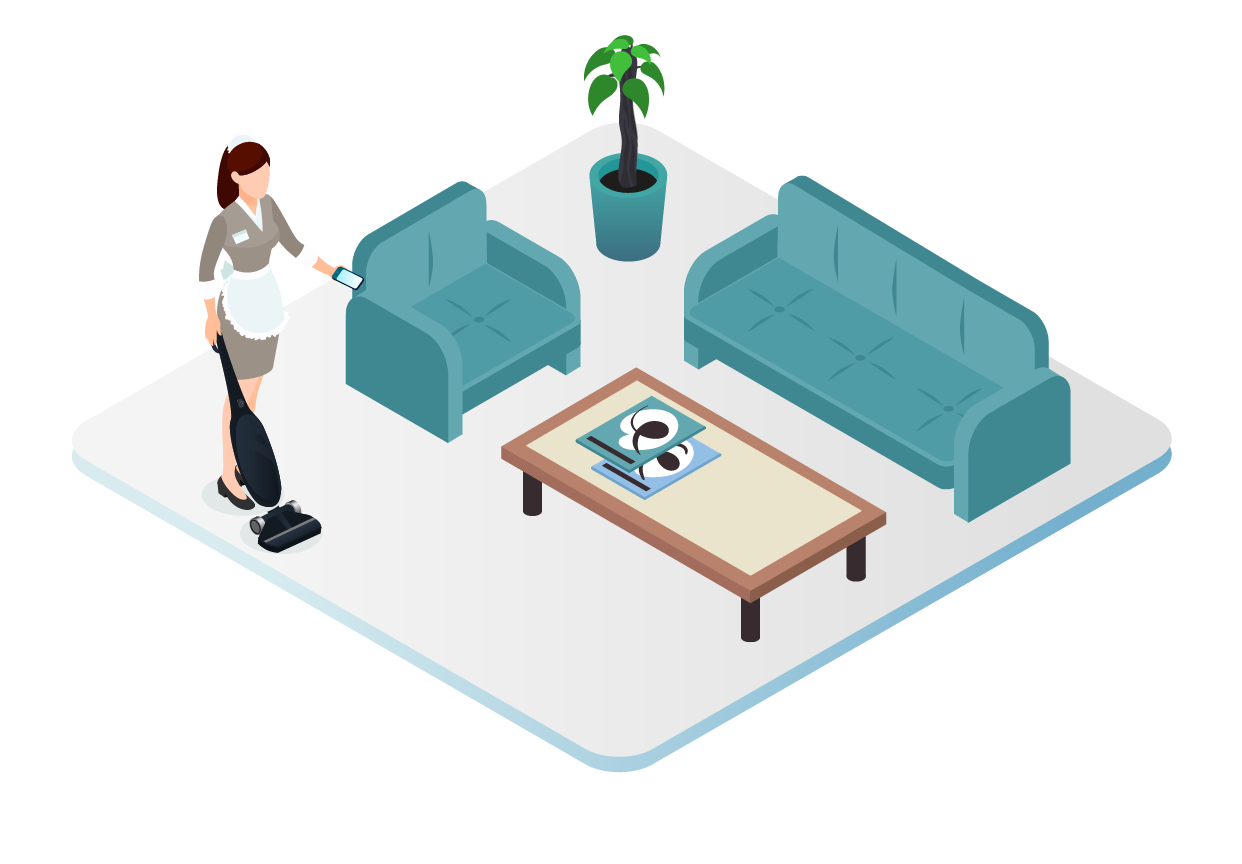
In the cleaning module, tasks are created in three ways:
- Automatic assignment. After the night audit, occupied rooms are marked as Dirty. Tasks are assigned with a balanced staff workload in mind.
- Manual creation in your PMS. You can create a task for any room manually. For example, if deep cleaning is scheduled every 20 days but a room is already very dirty, an admin can create an unscheduled request.
- Post-maintenance cleaning. You can select an option to clean a room after repairs are done.
Task Management in the Staff App
Housekeepers see their tasks in the mobile app. Urgency is determined by the type of room and cleaning. For example, deep cleaning in suites might always come first.
Cleaning Module as Part of Your Motivation System
The system tracks how many tasks each housekeeper completes and how well they do them. This makes it easy to monitor the KPIs that determine employee pay. Just like with maintenance, you can assign points based on task complexity and completion time.
When working with outside contractors, automated quality tracking helps you monitor their work and decide whether to continue your partnership. For example, if you work with a cleaning company, supervisors can log data in the system. If a contractor consistently fails to meet standards, you have clear evidence when renegotiating terms.
These are just a few examples of how automation transforms daily operations at health resorts. But there is always more to learn. That is why we share our expertise beyond just software, so you can see what best practices look like in action.
The Jivi Telegram channel is a helpful resource for doctors, executives, managers, and marketers who work in health resorts and wellness centers. We cut through the noise to deliver insights that matter:
- In-depth articles and case studies
- Latest industry trends and news
- Practical tools and smart approaches turned into simple how-to guides
- Ready-to-use checklists and forms to save your time

Summary
Automation helps your health resort manage staff more effectively, and track outside contractors. Cleanliness is what review sites always ask about. Guests may not think about it when everything is fine, but when something goes wrong, your ratings suffer.