
Less Paperwork, More Patient Care: A New Way to Handle Medical Records

Here are the most common problems health resorts run into when they implement a Medical Information System (MIS) that’s user-unfriendly:
- It slows doctors down. The medical offices’ capacity drops, and doctors see fewer patients. This means less revenue for the resort and fewer happy guests.
- Some doctors have to catch up on data entry after work. With an already heavy workload, this is a one-way street to burnout.
- Staff just ignore the system and stick to their old paper flow. When that happens, the money spent on automation is basically a loss.
- The patient data suffers. This data is crucial for managers and marketers. If staff fill it in without paying attention, just because they have to, it becomes useless. More often than not, numbers just won’t match reality.
- Management decisions based on bad data miss the mark. The same goes for marketing budgets. You can fund the wrong department while a critical issue elsewhere goes unnoticed and grows.
To avoid this, you need a system that’s built for a busy professional. No extra clutter, just the tools a doctor needs. It sounds simple, but most off-the-shelf solutions ignore the needs of your staff and the health resort processes altogether.
That’s why, when we built Jivi, we teamed up with real doctors from top resorts — people who conduct dozens of appointments every day. And we still work with them today because the industry keeps changing, and our system grows along with it.
Here’s what medical documentation looks like when it’s designed for people who actually use it.
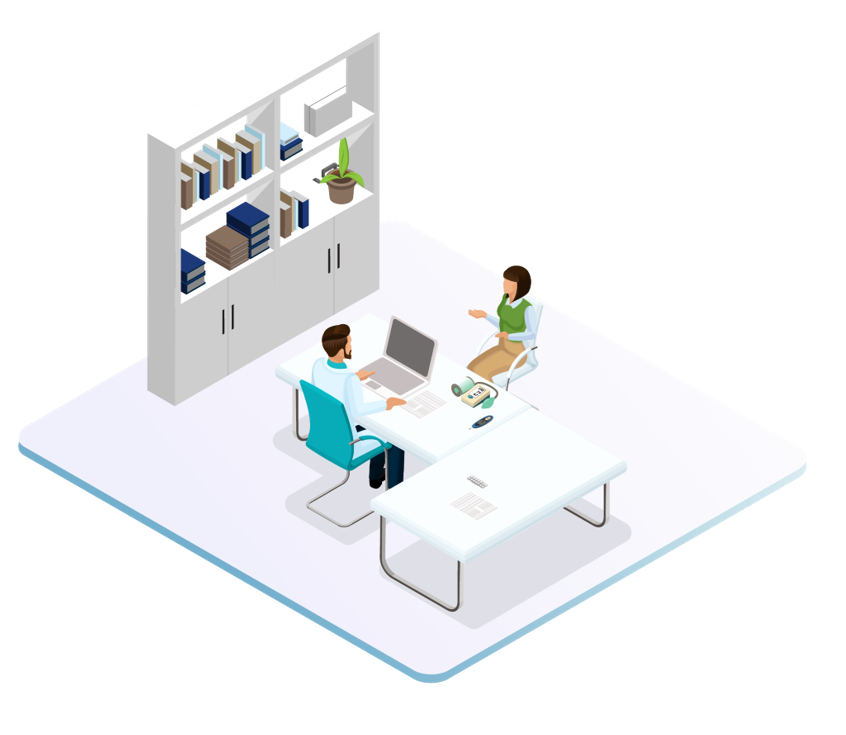
1. Examination protocols tailored to your resort and specialists. Every health resort has its own unique set of practices that need to be digitized with care. That’s why Jivi’s interfaces look different for each facility.
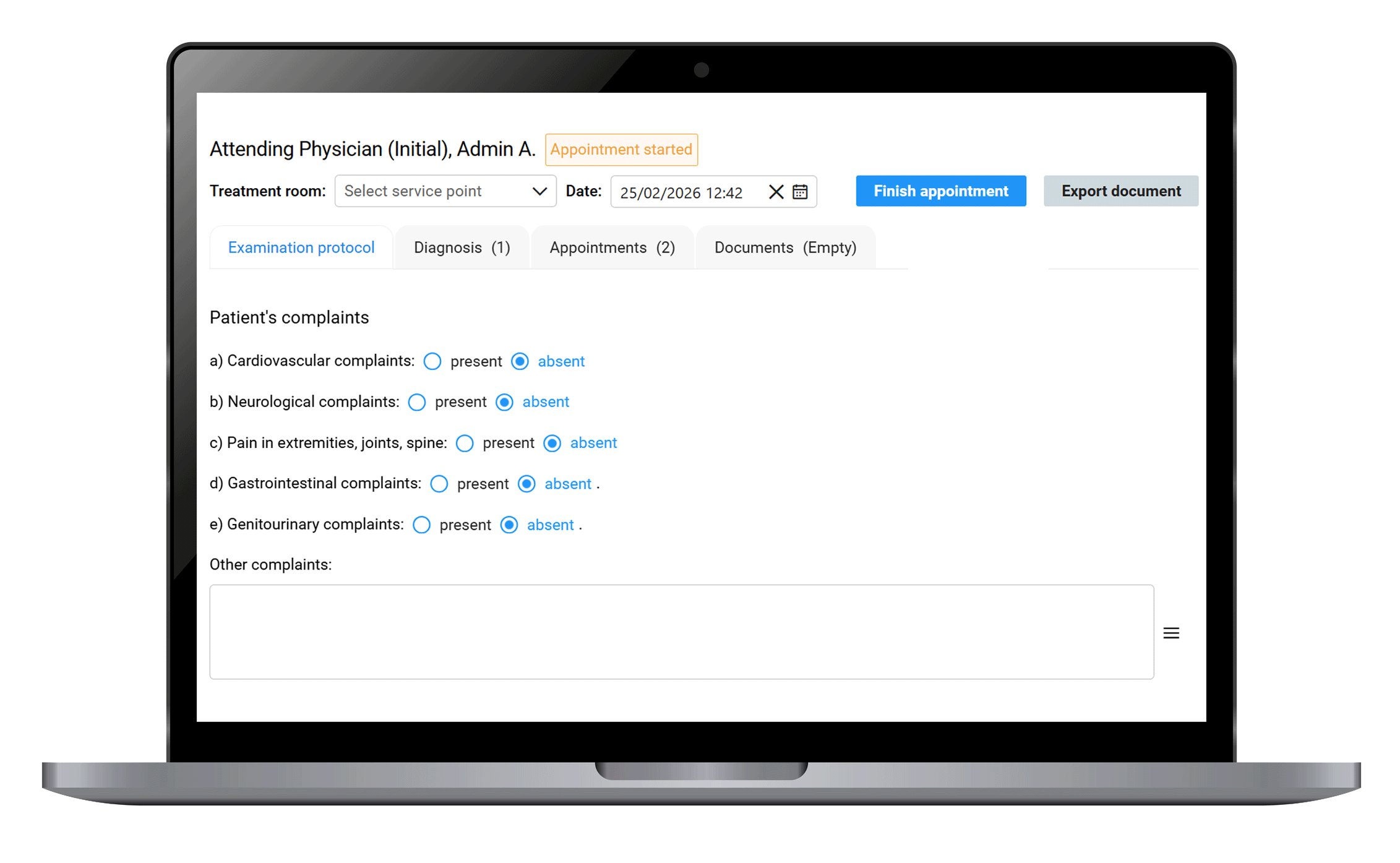
2. Pre-filled forms. In a patient’s examination report, everything is pre-filled with normal values based on their age and sex. Instead of documenting what’s healthy, a doctor simply notes any abnormalities. The system automatically adjusts normal ranges for each patient. This applies to everything from skin condition and heart rate to lymph nodes and other physical data.
3. Paperwork that writes itself. Referrals, epicrises, and other documents shouldn’t eat up a doctor’s time. All of it can be generated with a simple click of a button, then printed out, viewed in the patient’s mobile app or sent to their email. For example, a discharge epicrisis can be turned into a nice, branded health passport that shows the patient’s results, the “before and after,” and their next steps based on doctors’ recommendations.
How much does a health facility multidimensional automation cost? It depends on several parameters. Fill out a short form to find out. As a bonus, you will get a calculation template «7 customer service indicators».
4. Typing? Not so much. How a doctor notes symptoms matters, too. Instead of blank spaces to type into, we use checkboxes, drop-down menus, and smart templates that autofill. And the system learns as you go. Type a phrase once, and it’s saved. You’ll never have to type it again.
5. An alternative: just say it. For complex cases when a doctor needs to record a lot of detailed notes, they can just use their voice. They dictate into a microphone, and the system turns their speech into text. It handles even complex medical terms with ease.
If you’re looking for more ways to simplify your work and stay informed, the Jivi Telegram channel is a helpful resource for doctors, executives, managers, and marketers who work in health resorts and wellness centers. We cut through the noise to deliver insights that matter:
- In-depth articles and case studies
- Latest industry trends and news
- Practical tools and smart approaches turned into simple how-to guides
- Ready-to-use checklists and forms to save your time

6. Real training, not just a manual. Handing a doctor a new system and leaving them to figure it out is a recipe for failure. Giving them a 50-page manual is just as bad. We believe in helping our clients get comfortable with their new tool the right way. That’s why our team provides in-person introductions to Jivi. If needed, we even teach basic computer skills — for some doctors, this is their first time using a PC. And it works. The doctors learn by doing and see for themselves that the new way is actually easier. Age isn’t a barrier here. Our oldest student was 86. After just a couple of days, she became Jivi’s most enthusiastic ambassador. On average, we help health resorts turn 20 minutes of paperwork into just a couple of minutes.
All of this not only makes a doctor’s job easier, but also helps them build a better connection with their patient. When a doctor spends 90% of the appointment looking at their patient and talking to them, instead of filling out forms, the whole atmosphere changes. It’s more human. Of course, a lot depends on the doctors themselves and how they interact with people. But even the best doctor in the world can’t show they care if they’re buried in paperwork.